
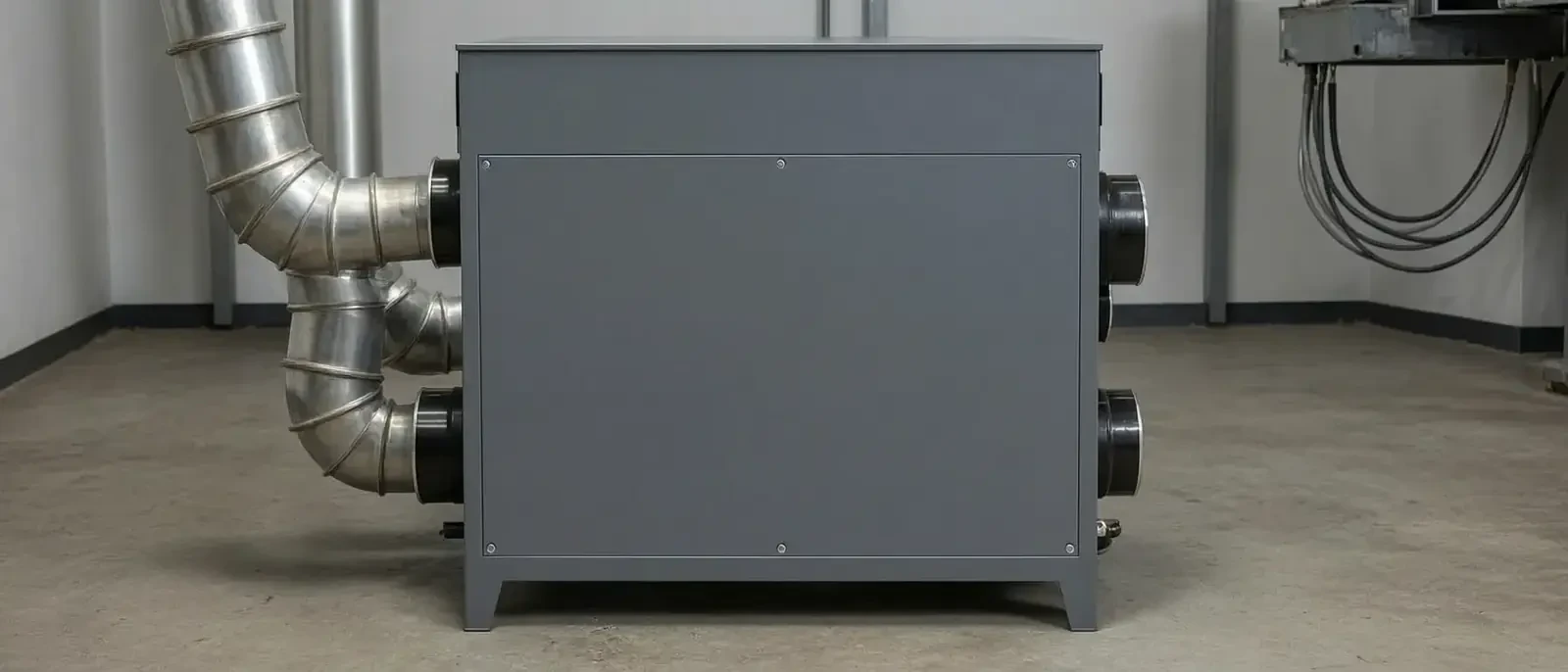
Desiccant rotor dehumidifiers
Low dew-point drying from -10 to +45 °C for cold stores, cold chain and laboratories.
DVR-200
0.6 kg/h
Learn more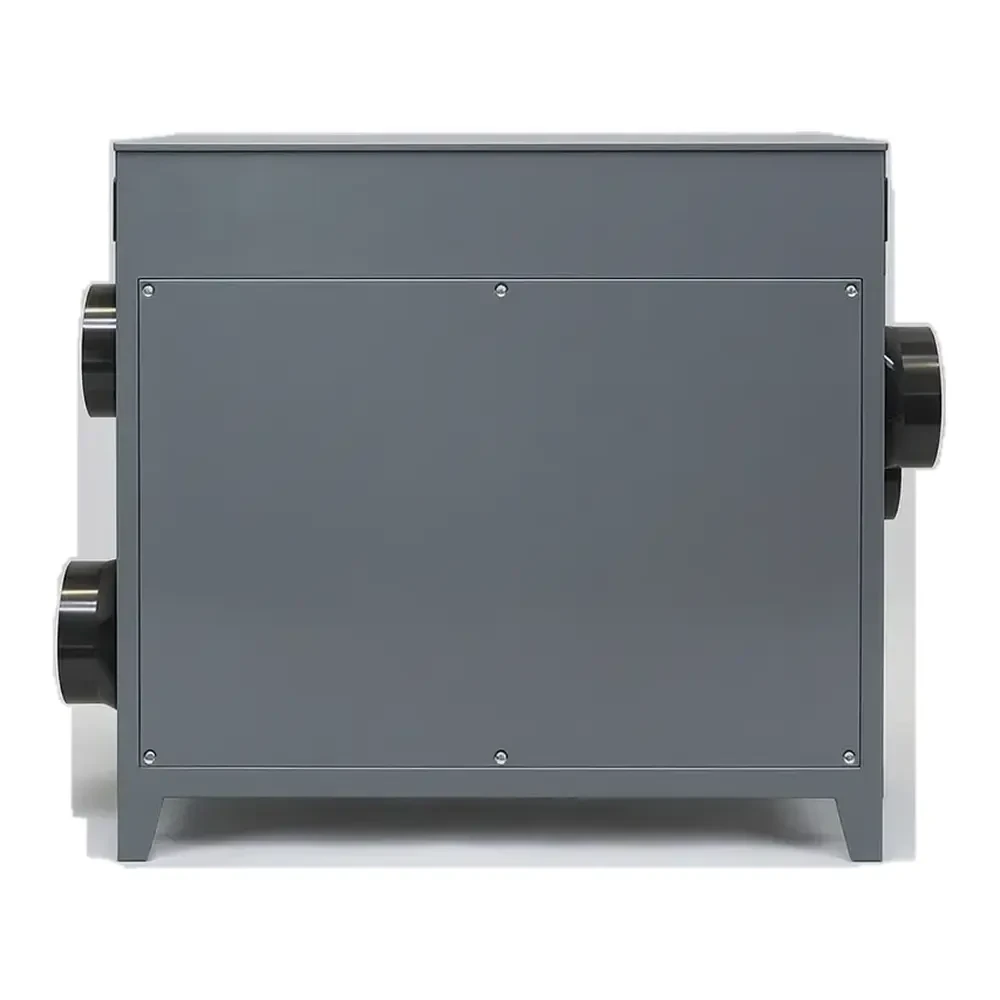
DVR-600
3.2 kg/h
Learn moreDVR-800
5.5 kg/h
Learn moreDVR-1200
8 kg/h
Learn moreDVR-1500
10.2 kg/h
Learn moreDVR-2000
14 kg/h
Learn moreDVR-2500
18.5 kg/h
Learn moreDVR-4500
30 kg/h
Learn moreDesiccant rotor dehumidifiers in detail
Low dew-point drying from -10 to +45 °C for cold stores, cold chain and laboratories.
- Silica-gel desiccant rotor for low dew-point drying
- Holds 10–40% RH where condensing units fall short
- Runs from -10 to +45 °C without a defrost shutdown
- No liquid condensate, so no drain pipe is required
Enquiries are answered within one business day.
The 0.6 – 30 kg/h range in this catalogue is not a menu of sizes: each frame changes the working surface, the airflow and the volume of water the unit has to handle, so the moisture load picks the frame rather than the floor area. DVR-200 at 0.6 kg/h is the smallest published frame here and DVR-4500 at 30 kg/h is the largest. 8 models are published in the range, and each one is quoted against the condition it will actually see rather than the headline figure.
Reactivation air has to leave the building, so the ductwork and the heat source are part of the scope. The dew point required by the process sets the wheel depth, and the temperature of the room sets whether a rotor is needed at all.
If the answer is a different platform, the selection check says so, with the calculation that led there.
Low dew point, and why a coil cannot get there
Dew point is the temperature at which air is saturated: cool it below that figure and water leaves. A low dew point dehumidifier therefore has to reach a coil surface colder still, and below roughly 0 °C that surface frosts. That is the physical limit of condensing equipment, not a shortcoming of one model.
A desiccant rotor removes the water chemically instead: the wheel adsorbs vapour and the reactivation air carries it out of the building, so the process air can be dried far below what a coil reaches. Battery dry rooms are commonly specified near -40 °C dew point, and cold stores use the same platform at -18 °C and above.
Where desiccant rotor dehumidifiers are used
Desiccant rotor dehumidifiers remove water on a rotating wheel and discharge it with reactivation air, so they keep working where a condensing coil cannot. The DVR range covers 0.6 to 30 kg/h for low dew-point drying from -10 to +45 °C, supplied as packaged cabinets or as rotor sections for air-handling units where the client builds the casing.
Rotor dehumidifier questions
What dew point can a rotor unit reach?
The published range covers low dew-point drying from -10 to +45 °C. The exact figure depends on reactivation heat and airflow, so the design point is stated in the selection sheet rather than assumed.
Why not use a condensing unit in a cold store?
Below roughly 10 °C a condensing coil removes little water and risks icing. A rotor unit carries the moisture out on the reactivation air instead of condensing it on a cold coil.
What does the rotor need in service?
Filter changes and a periodic check of reactivation temperature and rotor seals. The desiccant itself is not consumed in normal operation.
Is a silica gel rotor different from a desiccant wheel?
They describe the same component: a wheel coated or impregnated with a desiccant such as silica gel, which adsorbs water from the process air and is dried again by the reactivation stream.