Humidity control by application

Each application sets its own target: a freezer aisle, a GMP room and a print hall do not hold the same humidity, and they do not remove water the same way. The sections below state the band each case works to and the inputs used to size the equipment.

Cold storage and cold chain: How do you keep a freezer aisle free of ice?
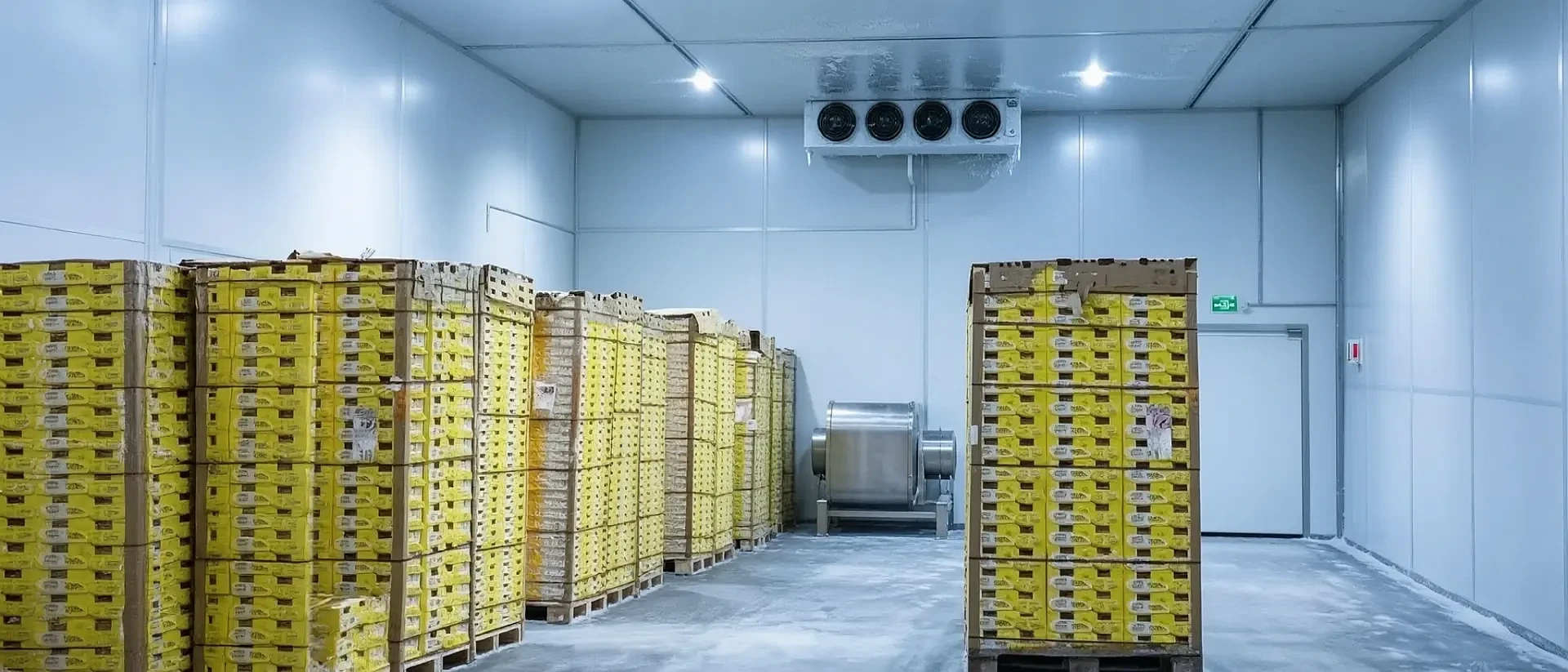
Cold store interior with insulated panels and a desiccant rotor dehumidifier

With a desiccant rotor unit. At freezer temperatures a condensing coil removes almost no water and ices up, while a rotor wheel takes the moisture out on the reactivation air, so ice stops forming on floors, rails and door frames.

  • Freezer rooms and blast freezers
  • Chilled storage at 0–8 °C
  • Ante-rooms and loading docks
  • Ice build-up on doors, rails and floors
Pharmaceutical and cleanroom: What humidity does a GMP cleanroom need?

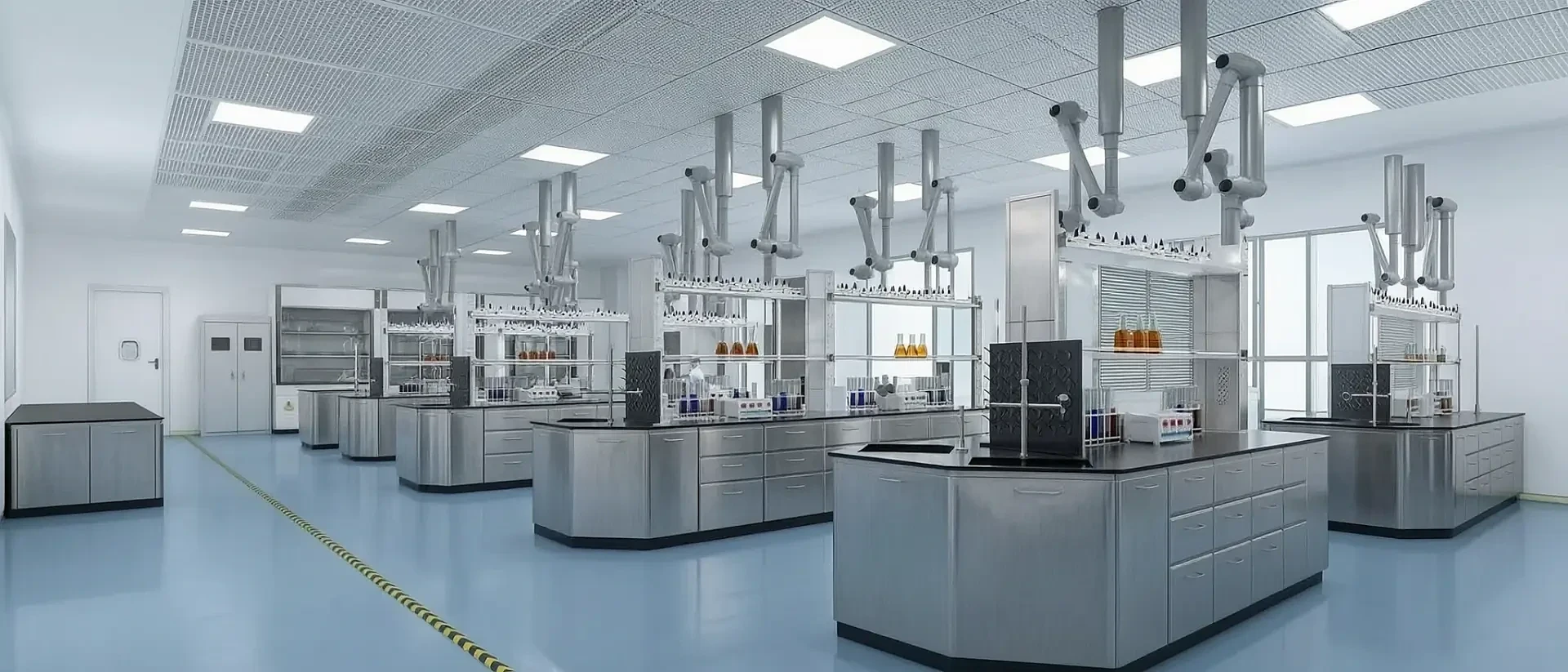
Pharmaceutical cleanroom with stainless steel equipment and controlled humidity

Most pharmaceutical rooms and cleanrooms are specified in the 45–60% RH band, with tighter limits for moisture-sensitive products. The figure comes from the product, the process and the room classification, and it is the number the dehumidifier is sized against.

  • Granulation, coating and drying rooms
  • Powder and tablet storage
  • Cleanrooms and airlock zones
  • Stability and sampling rooms

Electronics and SMT assembly: Which humidity band suits SMT assembly and PCB storage?

Electronics assembly hall with industrial dehumidifiers along the wall

Assembly halls are commonly held around 40–55% RH: dry enough to limit moisture uptake in components and paste, but not so dry that static builds up. Bare boards and moisture-sensitive devices are stored in the lower end of that band, or in a dry room where the specification calls for it.

  • SMT and reflow lines
  • PCB and component storage
  • Conformal coating and potting
  • Battery and dry-room production

Food processing and packaging: How is condensation stopped in a food plant?

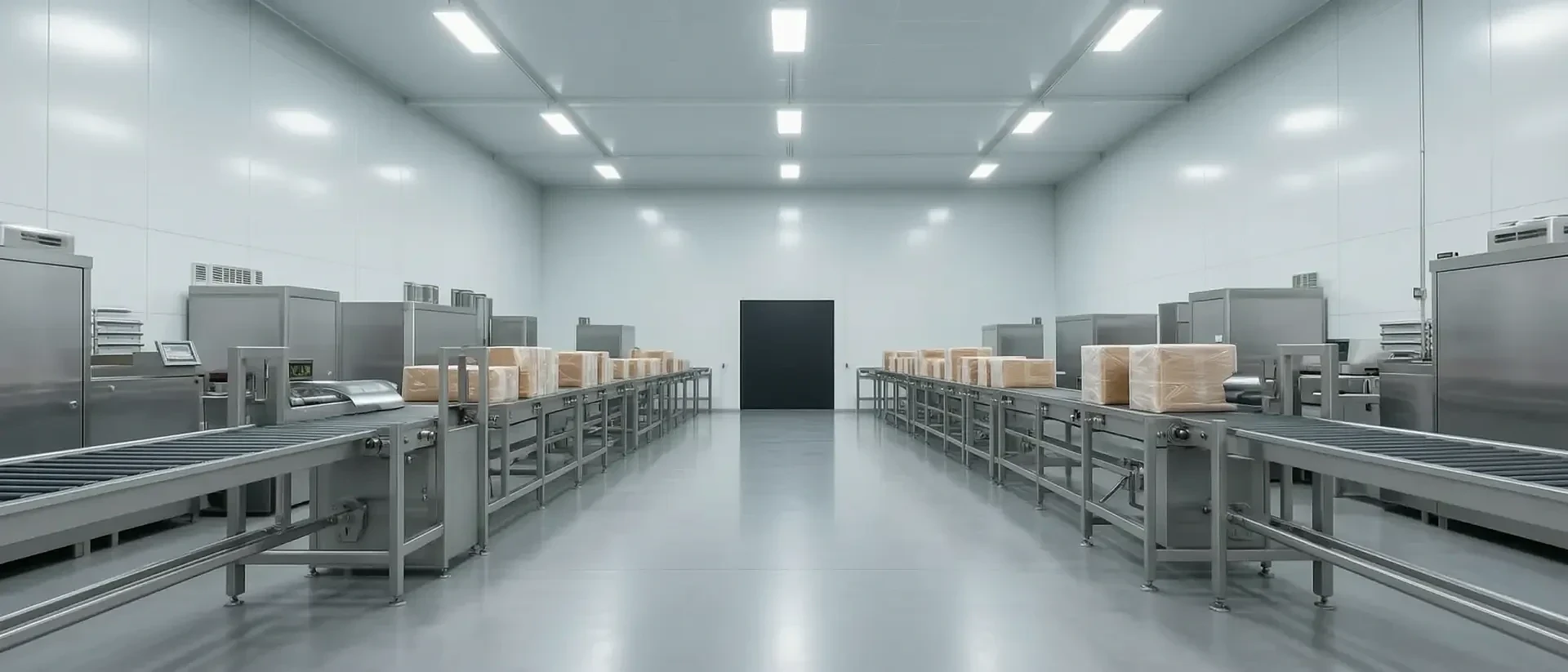
Food processing hall with stainless steel lines and packing conveyors

By holding the dew point of the room air below the temperature of the coldest surface. That removes the water film on ceilings, pipes and packaging lines without cooling the whole room, and it keeps the fabric dry where hygiene inspections look first.

  • Meat, dairy and ready-meal lines
  • Noodle, bakery and confectionery drying
  • Cold packing and blast chilling
  • Warehouse ceilings and pipework

Printing, paper and packaging: Why does a print hall need 45–55% RH?

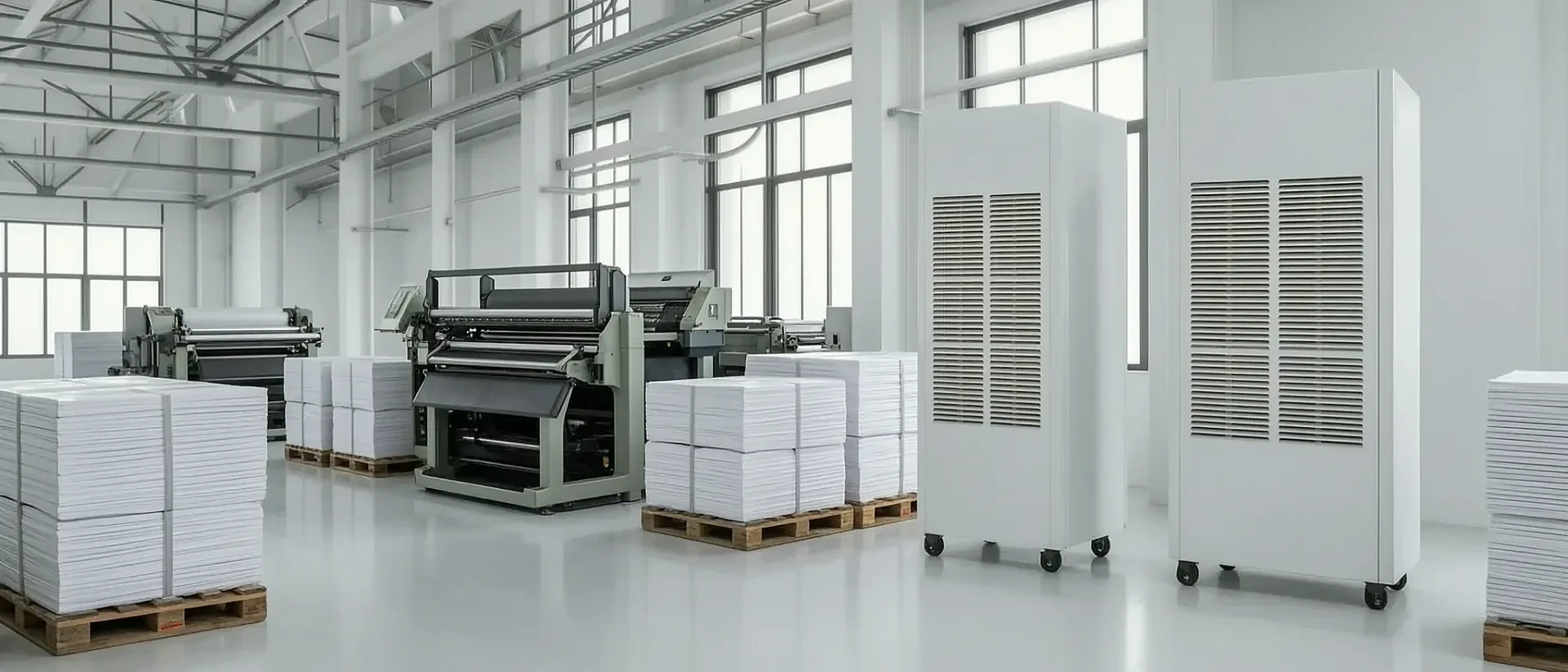
Print hall with offset presses, paper pallets and dehumidifiers

Paper changes length as it takes up or gives off moisture, so a stable band keeps registration and fold lines consistent through the run. Holding 45–55% RH also cuts static on sheet feeders and stops curling in stored stock.

  • Offset and digital press halls
  • Paper and board storage
  • Corrugated and carton lines
  • Laminating and coating

Warehouses and logistics: How do you size a dehumidifier for a warehouse?

Warehouse aisle with pallet racking and a ceiling dehumidifier installation

From cubic metres and air changes, not from floor area. Volume multiplied by the air-change rate gives the outdoor air entering the space, and the moisture difference between that air and the target condition gives the load the unit has to remove each hour.

  • General and bonded warehouses
  • Loading docks and door openings
  • Equipment and spare-parts stores
  • Archives and document storage

Basements, car parks and technical rooms: Can a basement be dried without heating the building?

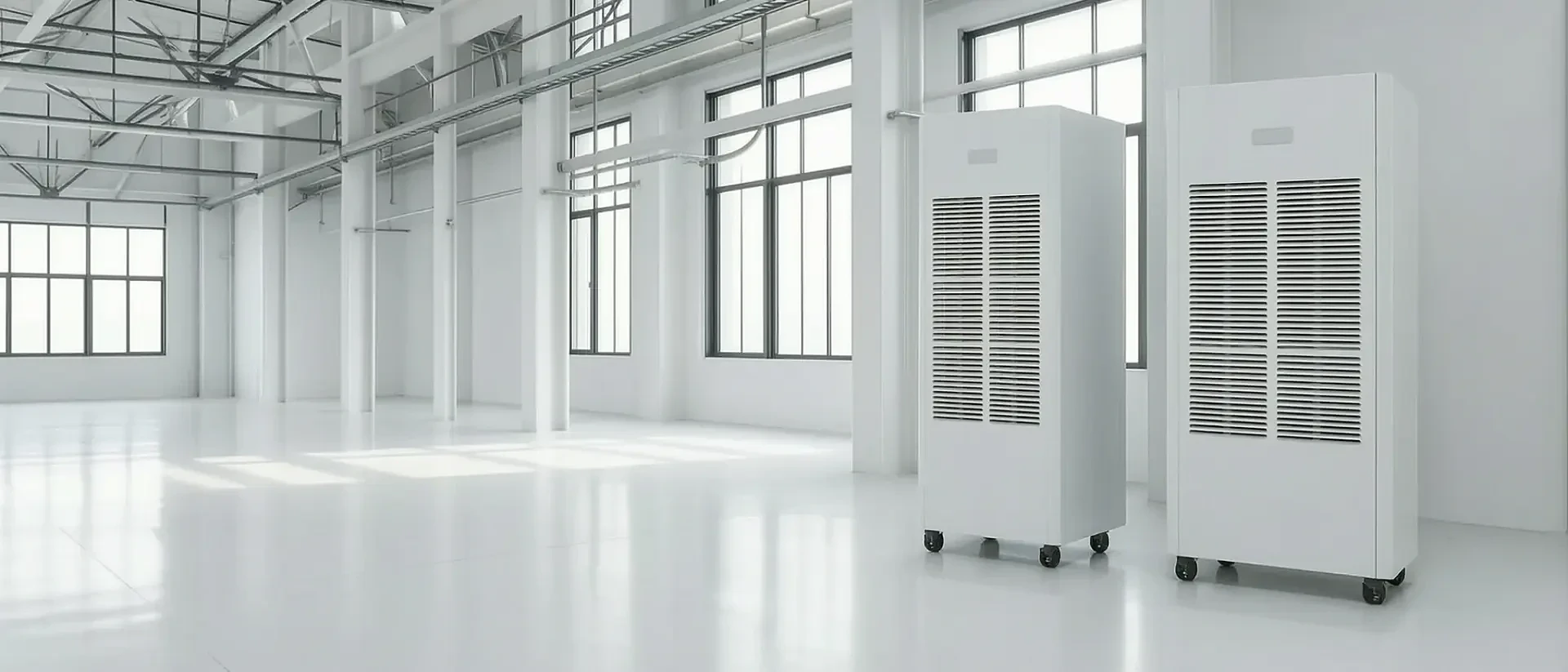
Underground car park with ceiling-mounted dehumidifiers between beams

Yes. A dehumidifier removes the water vapour directly, so the space dries without raising the temperature of the whole building. Ceiling units suit car parks and plant rooms because they leave the floor and traffic routes clear.

  • Underground car parks and ramps
  • Pump, plant and switch rooms
  • Basement storage and archives
  • Villas and homestays in humid climates

Process humidification: Where is ultrasonic humidification the right choice?

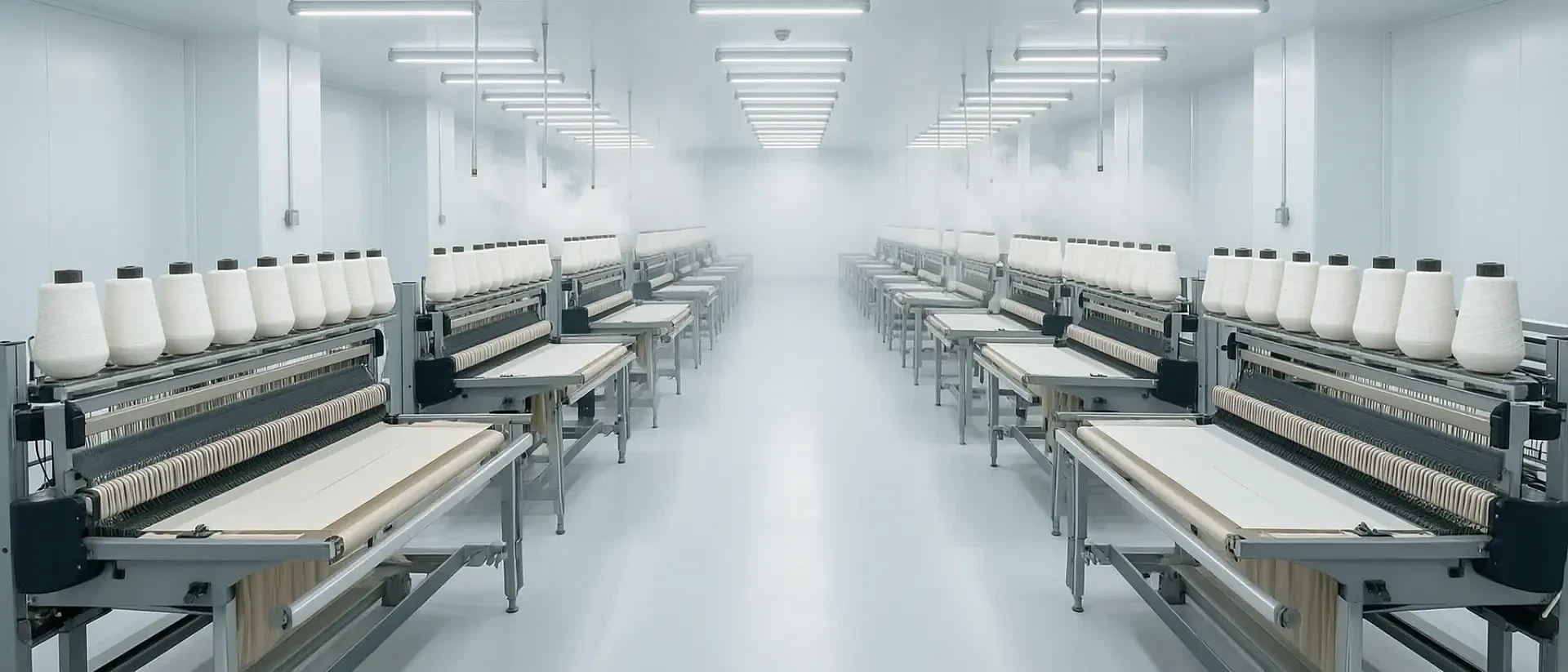
Textile weaving mill with ultrasonic humidification mist above the machines

Where moisture has to be added without steam and without a large temperature rise: textile weaving and spinning, print halls, greenhouses, woodworking and rooms with drying-sensitive materials. The output is matched to the calculated deficit of the room.

  • Textile weaving, spinning and winding
  • Greenhouses and propagation rooms
  • Woodworking and furniture lines
  • Cleanrooms and laboratories

Not sure which band applies to your room?

Send the room dimensions, the highest and lowest temperature, the target humidity and the process inside. We reply with the calculation behind the model, not only a capacity figure. Enquiries are answered within one business day.

Request a quote

Humidity control sized from the room it serves

Dehumidifiers, ultrasonic humidifiers and constant temperature and humidity units are quoted with the condition each one holds, so the numbers can be compared.