
DVJ-12 Ultrasonic humidifier
Ultrasonic humidifier
- Ultrasonic atomisation producing fine, evenly distributed mist
- Water filter inside the cabinet keeps impurities out of the air
- Seven outputs from 3 to 36 kg/h with matching coverage ranges
- Class I, IPX68 protection for wet production areas
Technical specifications
| Model | DVJ-12 |
|---|---|
| Power supply | 220 V / 50 Hz |
| Rated input | 650 W |
| Rated current | 3 A |
| Coverage (3 m ceiling) | 100 – 150 m² |
| Mist outlet | 110 mm × 2 |
| Noise | ≤ 55 dB(A) |
| Protection | Class I, IPX68 |
| Dimensions | 460 × 425 × 337 mm |
| Weight | 16 kg |
Values are published catalogue data. Where a site condition differs, the approved drawing for the order takes precedence.
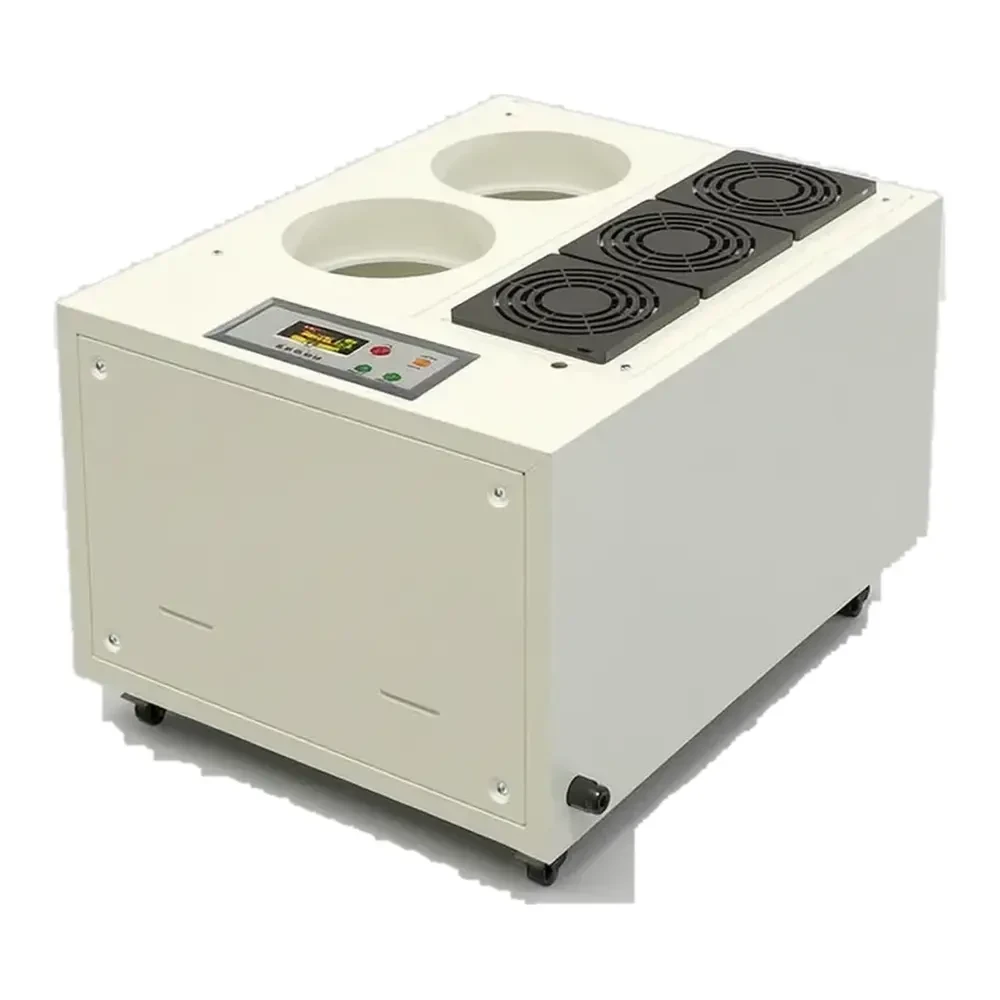
Cabinet photographs of the current series. Grille layout and control arrangement follow the approved drawing for each order.
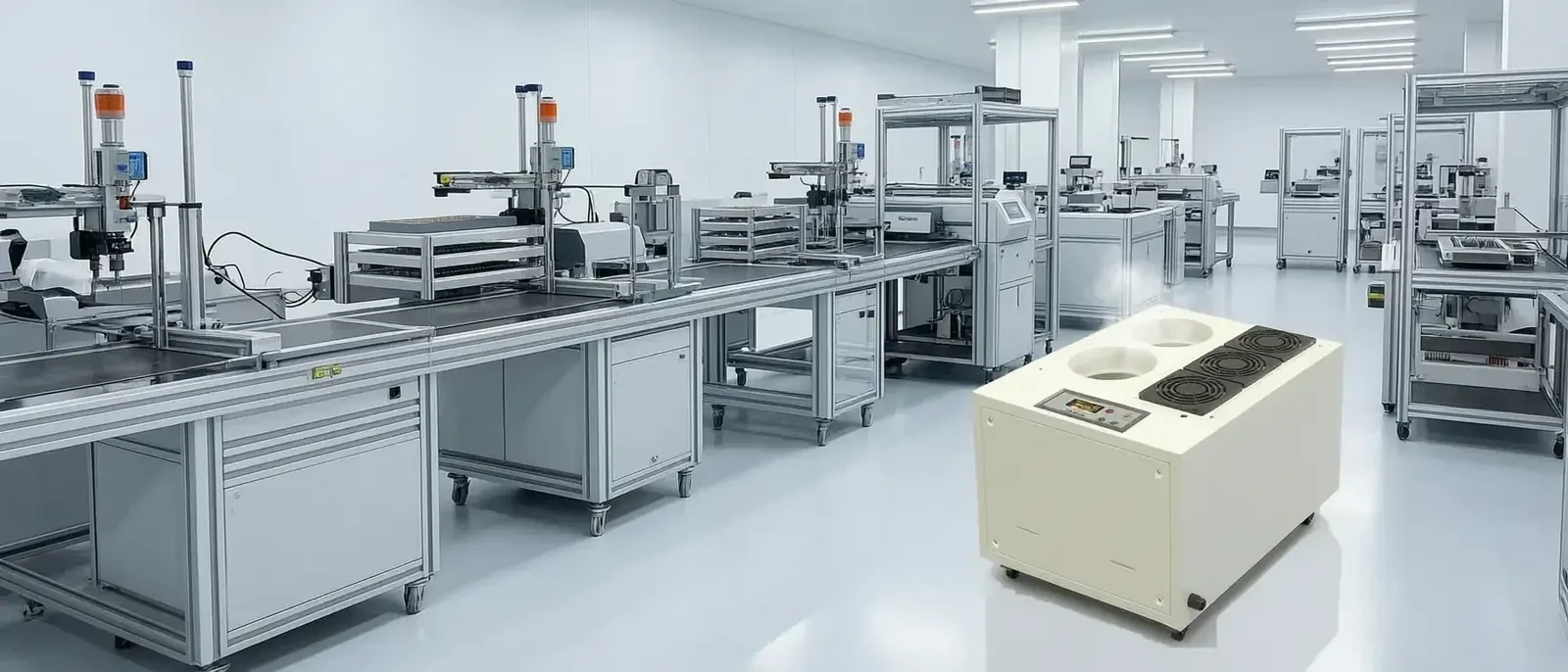
Seven ultrasonic units from 3 to 36 kg/h for production halls, print floors, cleanrooms and drying-sensitive processes.
Ultrasonic humidifier 12 kg/h belongs to the ultrasonic humidifiers platform. Enquiries are answered within one business day.
Using the DVJ-12
What the rating means
DVJ-12 is rated at 12 kg/h, which is about 288 kg, or roughly 288 litres, of water a day. Working figures of that kind are useful in two directions: they convert a moisture load into a model, and they show how much water the drain has to carry away on a wet day.
Catalogue capacity is quoted at a defined test condition, and the accepted figure for an order is the one on the approved drawing. Warmer, wetter entering air gives the coil more water to remove per cubic metre; cooler or drier air gives less. Any model quoted for a project is checked against that condition rather than the headline number.
Installation and air path
Mist leaves the outlets and is carried by the room air, so the outlets are placed where the mist can mix before it reaches people, product or a cold surface. Units need a water supply, a drain, and in hard-water areas softened water to keep dissolved minerals out of the air.
On this frame, the cabinet measures 460 × 425 × 337 mm, rated noise is ≤ 55 dB(A).
What to send with an enquiry
- Room volume or air-change rate, with the height the air actually occupies.
- Entering air temperature and relative humidity in the worst week of the year.
- The band that has to be held, and the tolerance the process really needs.
- Fresh-air volume and its condition, where the room is ventilated.
- Internal moisture: people, wash-down, open tanks, wet product coming in.
- Drain route and the power available at the mounting position.
With those answers the model is checked against the moisture load. If the frame is wrong for the room, the reply names the platform that fits instead of pushing this one.
Where this model stops
Output is rated in kilograms of atomised water per hour. How much of that reaches the process depends on air changes, temperature and the band being held, which is why coverage is calculated rather than read off the cabinet.
Drawings, electrical data and the installation manual are released with the order, so the site works from the document that matches the frame delivered.
Questions about the DVJ-12
How much moisture can the DVJ-12 add?
The DVJ-12 atomises 12 kg/h. How much of that moisture reaches the process depends on the air-change rate, the temperature and the band being held, so coverage is calculated from the room rather than read off the cabinet. Send the volume, the air-change rate and the target band and the figure comes back with it.
How is the DVJ-12 installed?
A water supply, a drain and outlets placed where the mist can mix with room air before it reaches people, product or a cold surface. The DVJ-12 needs softened or demineralised water in hard-water areas so dissolved minerals do not settle as white dust.
What power supply does the DVJ-12 need?
The published supply is 220 V / 50 Hz, with a rated current of 3 A. Cable size and protection follow the installed configuration, so the circuit at the mounting position is checked against the approved drawing rather than against the catalogue page.
What air temperature does the DVJ-12 work in?
Outside it the mist takes longer to evaporate, and output is calculated against the air change rate rather than read off the cabinet.
Is the 12 kg/h output guaranteed on site?
The figure is atomised water per hour at a defined condition. Absorption depends on the air-change rate, the temperature and the distance the mist travels before it evaporates, so coverage for an order is calculated for the room and written on the approved drawing. Enquiries are answered within one business day.