
Ultrasonic humidification for dry processes
5 August 2026Technology4 min read
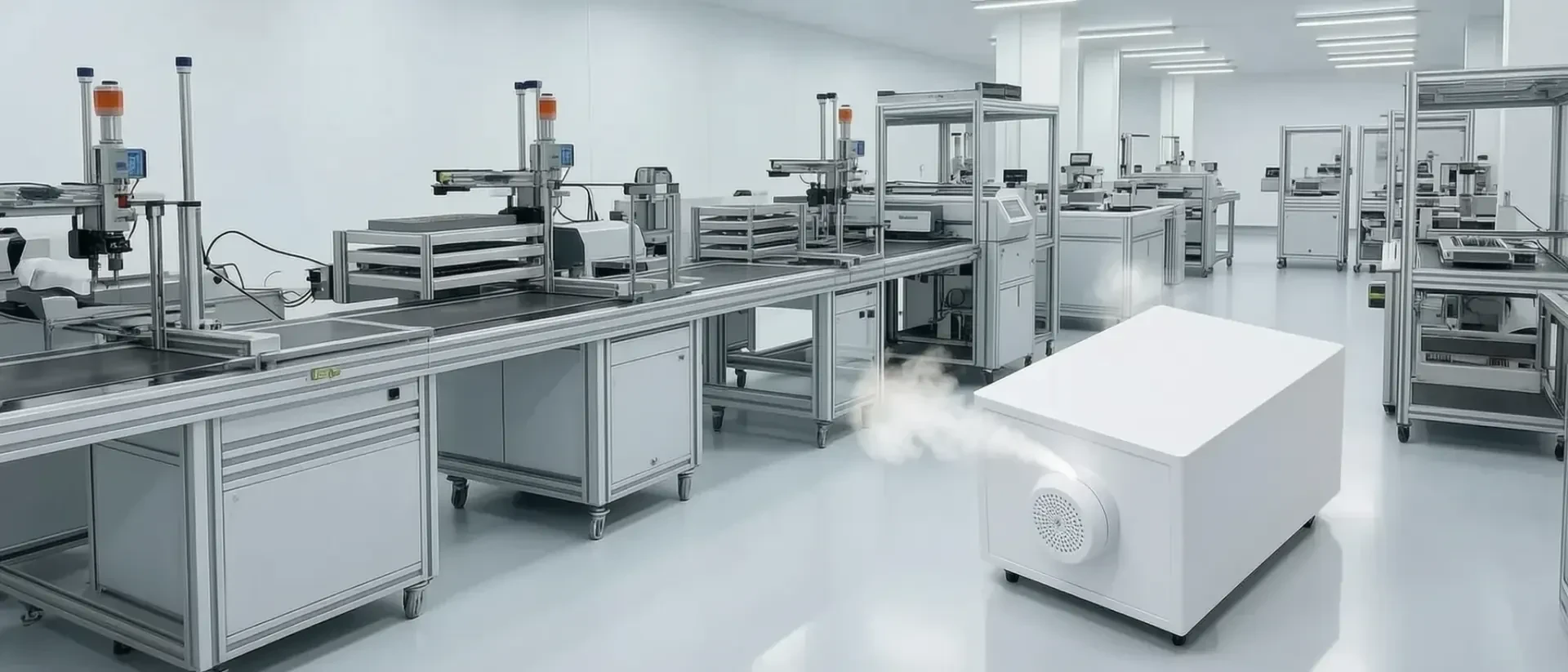
Ultrasonic humidifiers produce a fine mist without heating water. That makes them quick to respond and easy to zone, provided the water quality and drainage are handled.
Where a process needs moisture added rather than removed, ultrasonic humidification is often the simplest route. A transducer breaks water into a fine mist that evaporates into the air stream without a boiler or a steam line.
The result is fast response, low energy use for the moisture delivered, and equipment that can be placed close to the process it serves.
What the installation needs
The mist is only as clean as the water behind it. Three requirements decide whether the system stays reliable.
- Water quality: softened or demineralised water prevents white dust and scale on the transducer.
- Drainage and flushing: standing water in the tank must be replaced regularly, especially in intermittent operation.
- Air movement: mist has to be carried into the space, not left to fall on surfaces or equipment.
Where it fits
Textile and paper production, printing, woodworking, greenhouses and drying rooms all use ultrasonic humidification because the demand changes through the day and the zones are separate. Units are sized on the moisture to be added per hour at the design air change rate.