
Humidity control for GMP cleanrooms and pharmaceutical storage
8 November 2026Application note7 min read
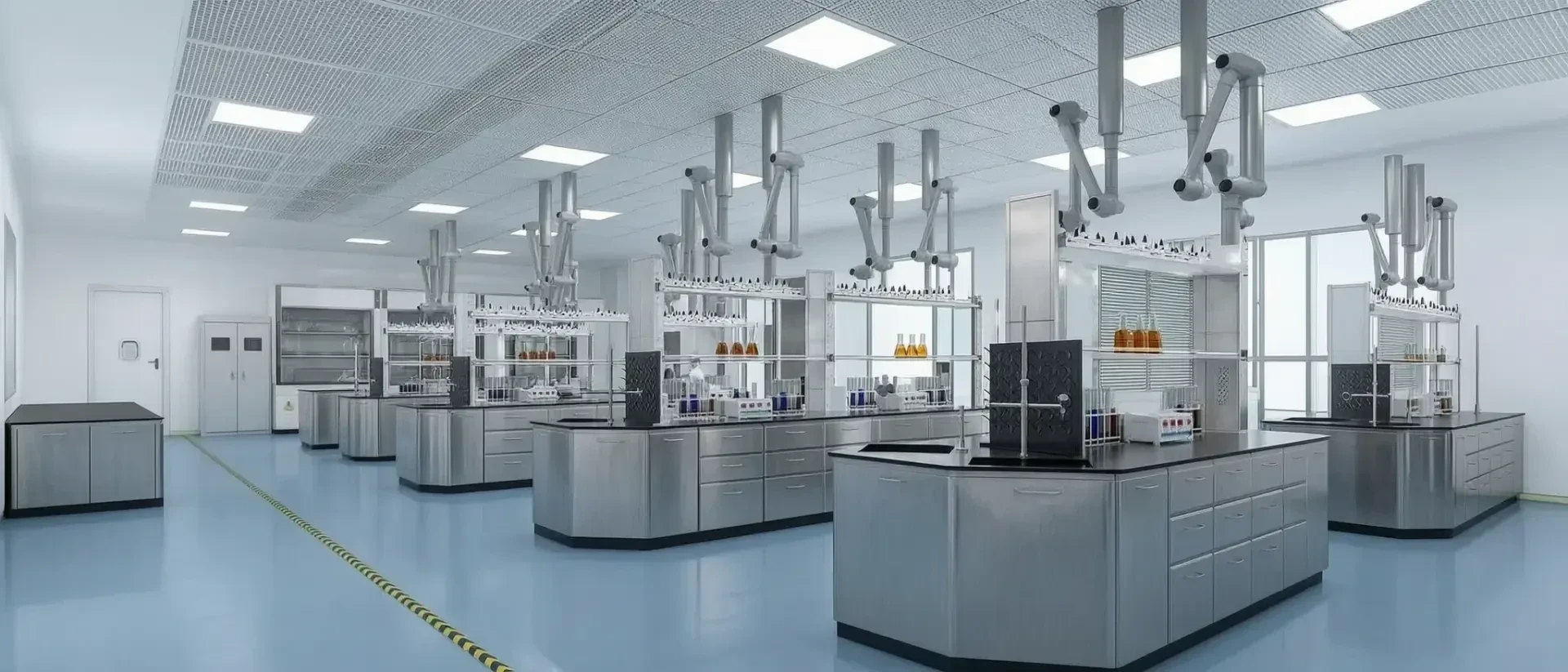
A pharmaceutical room is specified by its product and process first, then by the humidity band that keeps both stable. Here is how that number is set, and what changes when the same room also has to ventilate.
The humidity figure on a pharmaceutical project is a product decision, not a building default. It comes from what the material does when it takes up water: powders that stop flowing, tablets that pick up moisture in coating, granules that dry unevenly, or a container that rusts in storage.
Once that figure is known, the equipment question is narrower than it first appears. The room either has to be held inside a band, or it has to be dried to a lower dew point than the ventilation air can provide on its own.
Start with the process, then the room
Granulation, coating and drying rooms usually carry the largest moisture load, because water is deliberately evaporated inside them. Storage and sampling rooms carry a smaller load but tolerate less variation over time.
Ask what the room does at peak, not on an average day. A coating pan running for six hours adds far more water than the same room does when it is idle, and the machine has to hold the band during that peak.
Ventilation changes the calculation
A classified room is ventilated many times an hour, which means outdoor moisture is continuously brought inside. In a humid climate that incoming air can be the dominant load, and treating it before it enters the room is often more efficient than drying the room afterwards.
This is where fresh-air dehumidifiers and rotor units separate from simple room units: they are sized against the air volume and the design outdoor condition, not only against the internal process.
Holding temperature as well as humidity
Where the specification names both a temperature and a humidity tolerance, a constant temperature and humidity unit carries cooling, heating, humidification and dehumidification in one cabinet. That avoids two systems working against each other in the same room.
Where only humidity is critical and the temperature follows the process, a dehumidifier platform is simpler to run and easier to service.
What to send with the enquiry
The target band with its tolerance, the room volume and air-change rate, the design outdoor condition, the water added by the process, and the heat gains from equipment. With those five items the selection sheet can state the condition at which the capacity is guaranteed.