
Ceiling dehumidifiers in underground car parks: what actually works
30 September 2026Application4 min read
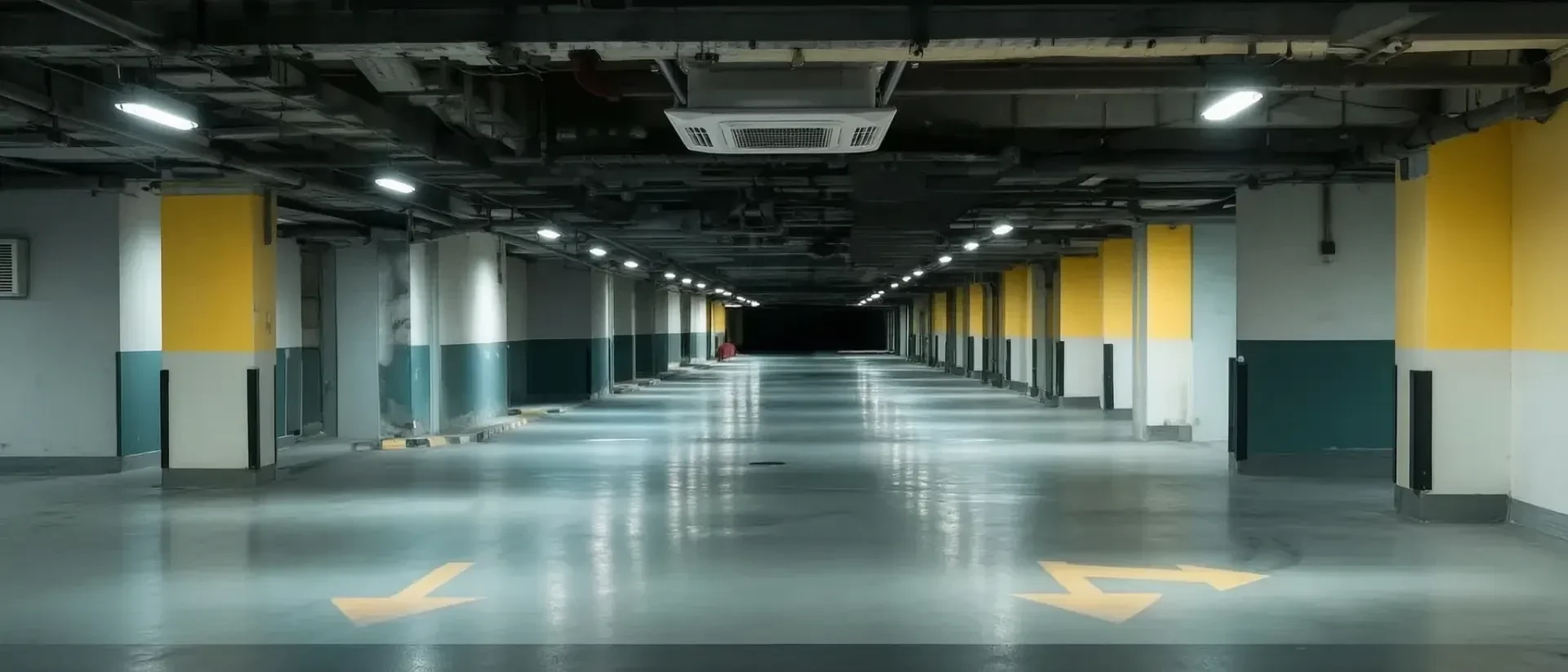
Basement car parks combine large slabs, vehicle traffic and constant infiltration. Concealed ceiling units keep the equipment out of the way, but the air path decides whether they work.
The visible symptom in a car park is condensation on the ceiling, on pipes and on parked cars. The cause is usually a slab that stays below the dew point of the incoming air, not a lack of ventilation alone.
Ceiling-mounted units are the usual answer because they leave the parking bays clear and can be ducted to the areas that stay wettest.
Design points that decide the result
Concealed units are only as good as their air distribution. Three items should be settled before the model is chosen.
- Return and supply positions: short-circuiting between them leaves half the floor untreated. Supply should reach the far ramp or the wall that condenses first.
- Static pressure: duct runs in car parks are long. A unit selected without enough available static pressure delivers less air than the catalogue figure.
- Drainage: condensate has to reach a floor drain or a lifting pump, and the route must be agreed with the builder before ceilings close.
Control and running hours
Car parks are rarely occupied continuously, but the slab stays cold for hours. Running the units on a humidity controller rather than a timer avoids drying an empty space and keeps the equipment from switching on and off around the set point.
Where several units serve one floor, a single controller with staged start reduces the current surge at switch-on and keeps the floor at one humidity level instead of several.